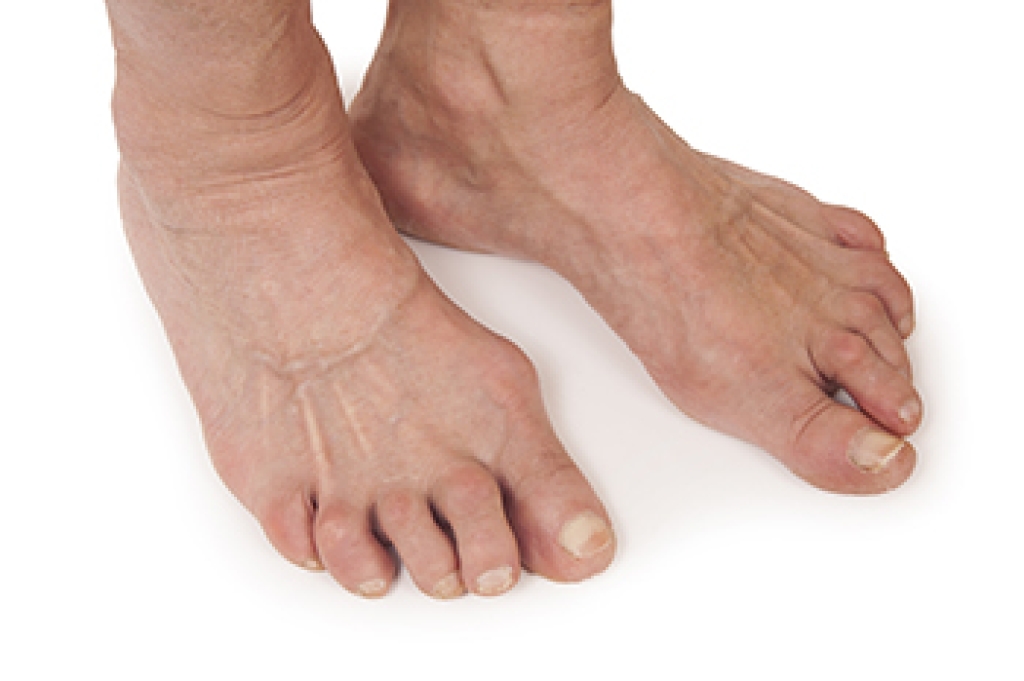
The Feet and Rheumatoid Arthritis

Rheumatoid arthritis is an autoimmune disease and may begin at any time in life. This type of condition attacks the joints in the body and can cause pain and discomfort. It can progress quickly, and the joints often become swollen and red. Many patients notice the disease affects the same joints on both sides of the body and may be felt in the balls of the feet. Patients may feel generally unwell and can easily become fatigued. The majority of people who have rheumatoid arthritis will have foot pain, and relief is often sought. Additionally, the foot may change shape, and nodules in the joints may form. The joints in the foot that are most affected are the ankle, talonavicular, and metarsocunieform joints. Relief may be found when custom-made orthotics are worn, which may help to reduce painful symptoms. If you have foot pain, it is suggested that you consult with a podiatrist who can properly diagnose and treat rheumatoid arthritis. 

Because RA affects more than just your joints, including the joints in your feet and ankles, it is important to seek early diagnosis from your podiatrist if you feel like the pain in your feet might be caused by RA. For more information, contact Patricia Mcilrath, DPM of Health One Podiatry. Our doctor will assist you with all of your podiatric concerns.

What Is Rheumatoid Arthritis?

Rheumatoid Arthritis (RA) is an autoimmune disorder in which the body’s own immune system attacks the membranes surrounding the joints. Inflammation of the lining and eventually the destruction of the joint’s cartilage and bone occur, causing severe pain and immobility.

Rheumatoid Arthritis of the Feet

Although RA usually attacks multiple bones and joints throughout the entire body, almost 90 percent of cases result in pain in the foot or ankle area.

Symptoms

  • Swelling and pain in the feet
  • Stiffness in the feet
  • Pain on the ball or sole of feet
  • Joint shift and deformation

Diagnosis

Quick diagnosis of RA in the feet is important so that the podiatrist can treat the area effectively. Your doctor will ask you about your medical history, occupation, and lifestyle to determine the origin of the condition. Rheumatoid Factor tests help to determine if someone is affected by the disease.

If you have any questions, please feel free to contact our offices located in Reading and Rittenhouse Square, PA . We offer the newest diagnostic and treatment technologies for all your foot care needs.

Read more about Rheumatoid Arthritis in the Feet

Do I Need to Have Foot Surgery?

Many patients consider having foot surgery when non-invasive options for their particular ailment have not worked. People who have severe bunions may opt for surgery, which is successful in permanently removing the bunion and realigning the toes. Patients who have arthritis may be interested in learning about fusion surgery, which can be helpful in relieving ankle pain. Hammertoe is a foot condition that causes the toes to bend upwards at the middle joint, and it may be difficult to wear shoes. Surgery may be performed that can permanently straighten the toes and can be successful in relieving existing pain. A common foot surgery involves the plantar fascia, which may become torn or irritated for various reasons. The type of surgery is helpful in repairing the plantar fascia, which is the band of tissue that connects the heels to the toes. If you have any type of foot condition that may be improved with surgery, it is suggested that you confer with a podiatrist who can determine if this is the correct decision for you.

Foot surgery is sometimes necessary to treat a foot ailment. To learn more, contact Patricia Mcilrath, DPM of Health One Podiatry. Our doctor will assist you with all of your foot and ankle needs.

When Is Surgery Necessary?

Foot and ankle surgery is generally reserved for cases in which less invasive, conservative procedures have failed to alleviate the problem. Some of the cases in which surgery may be necessary include:

  • Removing foot deformities like bunions and bone spurs
  • Severe arthritis that has caused bone issues
  • Cosmetic reconstruction

What Types of Surgery Are There?

The type of surgery you receive will depend on the nature of the problem you have. Some of the possible surgeries include:

  • Bunionectomy for painful bunions
  • Surgical fusion for realignment of bones
  • Neuropathy decompression surgery to treat nerve damage

Benefits of Surgery

Although surgery is usually a last resort, it can provide more complete pain relief compared to non-surgical methods and may allow you to finally resume full activity.

Surgical techniques have also become increasingly sophisticated. Techniques like endoscopic surgery allow for smaller incisions and faster recovery times.

If you have any questions, please feel free to contact our offices located in Reading and Rittenhouse Square, PA . We offer the newest diagnostic and treatment technologies for all your foot care needs.

Read more about Foot and Ankle Surgery

Connect With Us

scroll to top